--- THE DEATH PENALTY IS A BARBARIC RELIC ---
Showing posts with label Coursera. Show all posts

Saturday, April 4, 2015

Language, from Naples to the Rio Puerco

I have completed the first week's assignments for a Coursera on line class entitled "Miracles of Human Language: An Introduction to Linguistics".  The free course is sponsored by the University of Leiden in the Netherlands, and is taught by Marc van Oostendorp.  About 35,000 people are participating in the five-week course which is taught in English.  There are many who are students of linguistics and related disciplines and many are teachers.

The timing of the Coursera linguistics course was good for me as I have recently found myself pondering some issues of language which appeared in the course of my reading and later during a tour of some ancient ruins and a ghost town in the Rio Puerco Valley to the northwest of Albuquerque.
cartography-huber.com

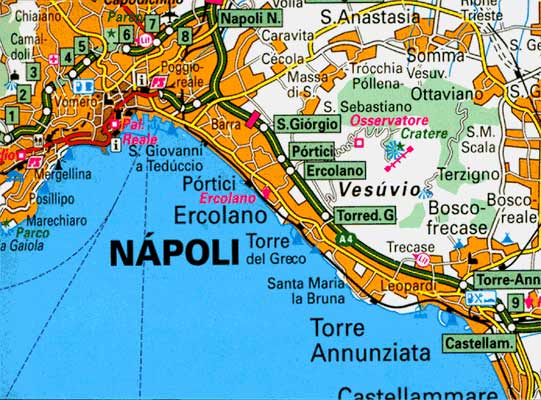
I finished reading a trilogy of novels about a week ago by the Italian author, Elena Ferrante, who writes about life in post-war Italy.  The main characters in the three books are two women who are life-long friends engaged in an epic struggle to survive poverty, violence and crushing social constraints in the city of Naples.  A surprising aspect of the story for me was the central role which the author gave to language in the development of her characters.  The community of small shop  owners from which the two women came are portrayed as using the Neapolitan Dialect almost exclusively in their daily life.  Differences in vocabulary, pronunciation and even grammar from standard Italian create difficult communication barriers for the characters, and a concerted effort to overcome those difficulties must be made by the two women to enable their success in the wider academic and business worlds.

Rio Puerco Watershed - usgs.gov

I described my participation in a tour of the Guadalupe Ruins and the near-by ghost town on the bank of the Rio Puerco in a previous post to this blog.  The interpretation of the village ruins was conducted by Nasario Garcia who had lived as a child with his extended family near the town.  I had an opportunity to ask him at the end of his presentation about the languages spoken in those days.  Not surprisingly, he said that in the far-flung small communities of the Rio Puerco Valley, only Spanish was spoken.  Garcia's first real exposure to English came only when he started attending primary school.  Garcia became the first college graduate in his immediate family, but achieving that goal was far from a certainty as he struggled in his first year an UNM to meet the school's language proficiency requirements. He went on from there to earn a PhD and to author over thirty books.  It was an extraordinary experience to hear Garcia recount that long journey as he stood in front of the crumbling adobe remnants of the village of Guadalupe.

Wednesday, January 29, 2014

Another MOOC

Pensamiento Científico 
by Carlos Gershenson

I have enrolled in a new free on-line Coursera offering, Pensamiento Científico.  It doesn't start officially until February 3rd, but the first week's lectures are already available, and I have completed all but one.  The Spanish vocabulary and the content are well within my grasp.  The presenter speaks quite rapidly but clearly, and his delivery is just enough of a challenge to be useful.  The very brief quizzes at the end of each lecture are useful to comprehension, and they can be repeated as often as necessary to maintain a perfect score.  Succeeding lectures may get beyond my comfort zone in terms of language and content, but I feel the course has already been well worthwhile in terms of coming to grips with the spoken language.

It seems to me that on-line courses like Pensamiento Científico would be a great addition to the offerings at Albuquerque's Cervantes Institute.  The resource is cost-free for students, and can be easily accessed in accordance with varying schedules.  The Institute could add useful value through the formation of discussion groups at the Albuquerque location, and I would think no one would object to a small fee for the use of the facility.  I will try to propose this idea Thursday when I will be at the Hispanic Cultural Center to attend a lecture by Martha Heard on her recently published book, Salir del Silencio, Voces de Càlig 1900-1938.

Advancing Rearward:
The course I am presently taking, as well as hundreds more offered by Coursera, is presently unavailable to anyone in Syria, Sudan, Iran and Cuba due to a ban on such online contact by the U.S. State Department.  It seems like quite a stretch to imagine that a basic course in scientific thought would seriously threaten U.S. security.  Given the disastrous PR associated with the wikileaks and Snowden revelations, it would seem that there would be considerable pressure to lift the current ban on access to free on-line educational resources for residents of black-listed countries.  In fact, another big course provider, edX, has been able to negotiate exemptions from the ban for students in Cuba and Iran.  So, maybe Coursera will get its legal act together and help eliminate this national embarrassment in the near future.

Wednesday, May 1, 2013

Equilibrium

According to Keynes, big economies seek equilibrium.  I'm learning about that for free at Coursera in an on line course on the Principles of Macroeconomics taught by Nilss Olekalns, a Professor of Economics at the University of Melbourne.


The course is half-way through its eight-week run.  It wouldn't be very hard to catch up if you are interested, though I suppose you might not be able to take some of the quizzes.  There's a lot of terminology to learn, and the modeling equations can look daunting at first, but it is all really just basic high school algebra.

My goal in taking the course is to acquire some basis for assessing news and opinions about economic matters.  Much of what one sees in the news about the economy has very little to do with real macroeconomic analysis, but focuses on moralistic and political objectives.  I generally trust what Paul Krugman has to say on the subject as he is an actual economist.  I also like the mathbabe, Cathy O'Neil, whose number-crunching abilities are right up there with Nate Silver's, but she's a lot more sophisticated and engaged politically.

One of the most interesting economic news items I've come across recently is The Debt We Shouldn't Pay by Robert Kuttner; it is a lengthy review of a book by David Graeber entitled Debt: The First 5,000 Years.  The review and the book give some depth( ! ) to the discussion of debt, starting with the fundamental fact that our current economic crisis is due almost entirely to private rather than public debt transgressions.

Happy May Day!

--------------------------
re: Coursera
Just saw this article on 28 new on line courses for K-12 teachers.