--- STOP THE WAR ---
Showing posts with label aircraft. Show all posts

Sunday, September 24, 2023

Fly-in

 I spent a Sunday morning at an airshow at the Double Eagle airport on Albuquerque's west side.  I shot a lot of digital with my little Lumix, and also most of a roll of Kentmere 100 film in my half-frame Mercury CX. It is an event mostly for vintage and home-built aircraft.

Here are the digital pictures.  


The star of the show was this little two-seater jet.  It appears to be a French Fouga CM.170 Magister.


Thursday, January 26, 2012

MiG-15

More doodling with OpenVSP.


This is a rather crude rendering of the mid-century Soviet fighter.  I still haven't figured out how to do cross-sections which would create a canopy, so I approximated one using a short fuselage object.  It also isn't clear to me how one might round off the tips on the wings and tail surfaces.  I'll work out the answers to some of my questions with practice, but it would be nice to see how others are dealing with some of the challenges.

Wednesday, January 25, 2012

OpenVSP

I put away my 3D drawing projects for some time because of a combination of frustration with the complexity of the tools and the nagging thought that they were taking too much time away from my photography.  Recently, I have been seduced into the 3D world again by the appearance of a new tool, OpenVSP.   As the NASA web site says:

OpenVSP is a parametric aircraft geometry tool. OpenVSP allows the user to create a 3D model of an aircraft defined by common engineering parameters. 

Compared to anything else I've tried, OpenVSP is blazingly fast, and * taa-daa * it's free.

Here is an example design that comes with the program showing its capabilities:


Here are  several doodles I produced in a few minutes each:


Here's my x-plane that I've been using to familiarize myself with the program's drawing tools:


There is a very good manual for OpenVSP which includes instructions on all the basics and a few ok video tutorials.  To get beyond the basics takes some dedication; I'm trying to figure out at the moment how to construct a typical aircraft coss-section which inludes a canopy.  Hopefully, there will be some online discussion developing around the program which will help to answer questions.  Since NASA has released the program as Open Source, perhaps there will also be some development of additional features and import/export options.

Sunday, July 11, 2010

Back at the Airport

I'm working at learning the rather daunting interface of the Blender 3D drawing program. Meanwhile, I'm still having fun noodling around with Google SketchUp.


The small airport composition is made mostly from recycled parts. The planes were replicated from a previous drawing. The two figures, the bike rack and the bench are from SketchUp's sample box. The spiral stairs is nearly a one-click production, thanks to the marvelous on line plugin from The Engineering Toolbox.

The inspiration for my small airport came in part from the ad below which appeared in the Nov. 1944 issue of Popular Mechanics. I also have my own memories of flying off grass strips in the '40s and '50s in Kent and Renton, Washington.


It certainly made good sense for Aeronca to target farmers with their ad pitch for new dealers. Farmers had the land, as well as the necessary mechanical and construction skills to support such an undertaking. I don't know how many such ventures were successful; probably a rather small percentage in the long run, I'd guess. Ultimately, of course, the small airports succumbed to the same suburban development onslaught that contributed to killing off the small farms.

I suppose there is still some possibility that one could start up a small aviation business these days, but the budding entrepreneur had better have an MBA, and maybe a minor in computer science.

Wednesday, July 7, 2010

Tuesday, June 29, 2010

Taking a break

I've parked the Fokker at the Airport while we are in Phoenix for a week.


I have a few details yet to finish when I get back. This will be a good chance to evaluate where I am with this stuff. There is a little irony in the fact that I have spent $600 on a computer to run a free program.

Saturday, June 26, 2010

Decoration

I decided my airplane needed some identifying insignia, so I set about figuring out how to do that.


The tail surfaces are flat and present no difficulty, but the fuselage and wing surfaces have curves that resist direct drawing techniques.

The maltese cross image was projected onto the slightly curved sides with a technique demonstrated in a video tutorial by Aidan Chopra, author of "SketchUp for Dummies".

For the crosses on the wings, I tried a plug-in tool that allows drawing on curved surfaces, but I couldn't achieve the kind of precision needed to complete the design successfully. In the end, I used the same technique that allowed me to cut the hole for the cockpit.

A form with the desired profile is pushed through the surfaces, the two objects are merged, and new edges and surfaces are created. Once an area is enclosed with a continuous perimeter, materials and images can be projected or painted onto it without leaking onto the contiguous surfaces.

I've also scaled back the cowling a bit to give the plane a profile a bit more in line with photos I've seen of it. I'm planning on tweaking a few more details, laying on some color, and hope to wrap up this project in a week or so.

Tuesday, June 22, 2010

All the parts together


I'd like to do a bit more with this Fokker d.VIII, but my old Dell computer is balking at the prospect. In order to display the shadows in this image I had to turn off hardware acceleration, so the process really slows to a painful crawl. I have learned quite a bit from doing this model, however, so I think I can put this one in the success column too. I can go back to doing simpler models for a while as there is still a lot of the basics I need to learn.

Saturday, June 19, 2010

around and around


I'm working on a new SketchUp model of a WWI plane. The 110 hp engine in it was an Oberursel Ur.II, a German product copied from a French design. I was vaguely aware that in such rotary engines, much of the machinery went around along with the prop. It wasn't until I began looking at CAD representations that I began to understand why the rotary was considered a good idea at the time, or what made them work. Two CAD depictions in particular make the functioning of rotary engines a lot easier to understand.

The cut-away depiction below is from the marvelous Vintage Aviator site. If you look closely you will see the key feature of the engine, which is that there are two axes of rotation.


How the machinery is linked by the two axes is illustrated with great simplicity by an illustration at the Animated Engines site. Once there, click on the "Gnome Rotary" link to view the animation. Under the "About" link, you will also find an excellent explanation of how the engine animations are produced.

Tuesday, June 8, 2010

Busman's Holiday

I spent the afternoon today modeling these 120 roll film spools which came along with my two oldest box cameras. The cores of the spools are turned wood, and the end caps are stamped sheet metal.


I needed a break from working on my latest airplane. Some little alignment errors have proven difficult to correct, and I'm not sure if this one will ever fly. I did learn several new SketchUp techniques in the process, however, so I still feel the time was well spent.

Sunday, May 23, 2010

SE.5

One of the nice things about making images in SketchUp is the ease with which one can generate a variety of views and styles once the model has been constructed.


The plan I used for my 3D model was for a simple old stick and tissue flyer. I added some details gleaned from web presentations of the SE.5, including an extraordinary site about a restoration and replication factory in New Zealand specializing in WWI aircraft.

I have read that most of the 3D aircraft models found in the Google 3D Warehouse are actually produced with programs other than SketchUp and then imported to the program. That may be, but there is also some extremely sophisticated and inspiring work being done natively in the program. One good example is a thread at the Sketchucation site showing many details of the construction process.

Friday, April 16, 2010

Albuquerque Visitors

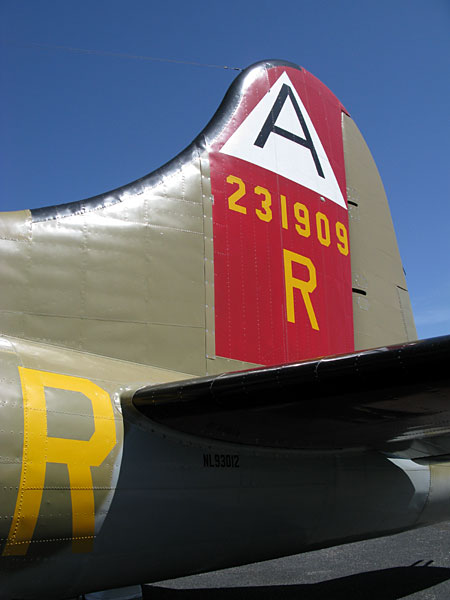
The Collings Foundation planes flew into Albuquerque on Wednesday: a B-24, a B-17 and a TP-51. They were here as part of the Wings of Freedom 2010 Tour.


The event was hosted at Cutter Aviation.


In addition to these digital pictures, I shot a roll of film in my 1940 Kodak Brownie Reflex camera. A page about the camera and the images from it are at my vintage cameras web site.