The mayor of Marinaleda, Juan Manuel Sánchez Gordillo, has been sentenced to seven months in prison for leading a group of about five hundred people in the occupation of a rural property owned by the Spanish military in Andalucía. The stated purpose of the action was to force the military to cede the property to the people of the nearby town of Osuna. Also arrested and sentenced were Diego Cañamero and two other leaders of the Sindicato Andaluz de Trabajadores (SAT). Sánchez Gordillo also faces a fine of a million euros. I have not found any report that the four men have yet been incarcerated, but that seems likely and imminent. What the outcome will be for the accused and for their community is uncertain, though it must certainly be perceived as a dire existential threat.
Coincidentally, with the help of friends with family in Spain, I recently obtained and read a book about Marinaleda which came out in the mid-'90s, Cultura Jornalera, Poder Popular y Liderazgo Mesiánico. Antropología Política de Marinaleda, by Félix Talego Vázquez. I believe the author spent a year living in the community while working on his doctoral thesis. By the time the book came out, Sánchez Gordillo had been the town's mayor for twenty years, a thousand-two-hundred hectares of farmland had been ceded to the community from the holdings of the Duke of The Infantado and the mayor had also been elected as a representative to the legislature of Andalucía.
While the successful establishment of a rural agricultural cooperative was still a work in progress at the time, the majority of the population had seen considerable improvement in their economic conditions in comparison to their neo-feudal past. At the same time, there appeared to be a generalized feeling that the revolutionary vigor of the movement was waning, partly in response to the encroachments of the developing European and Spanish economies. While the author in his final assessment recognized the community's continuing allegiance to the movement, he also implied that there was a very good chance that the utopian experiment that was Marinaleda would be swallowed up by a booming economy fueled by foreign investment and ramapant real estate development.
Of course, what actually happened and what nobody foresaw was the economic disaster of 2008 which brought crushing national debt, demands for austerity by northern European creditors, and catastrophic levels of unemployment. Marinaleda, it seems, was prepared to meet these challenges in a way that was unique in Spain. By the time of the collapse, the rural cooperative was an actuality. One hundred fifty families were able to build their own houses with materials and volunteer labor supplied from the community, and in the height of the crisis unemployment in Marinaleda did not exceed five percent. Some of this story has been told in journalistic accounts, including a recent article in El País, but there is clearly a need for a thorough follow-up to the book by Talego Vázquez.
It would be interesting to get the views of Talego Vázquez on how Marinaleda has fared since the publication of his book in 1996. It is unlikely, however, that the Marinaleños would let him back into town to conduct further investigations. The mayor and his supporters never showed much tolerance for outside criticism and they saw his book as an attack on their hard-won gains. While there is certainly truth to the assertion by the author that the mayor's leadership of the movement has something of a messianic quality to it, I have to confess some sympathy for the rejection of the analysis contained in the Talego Vázquez book.
Talego Vázquez from beginning to end, assesses the Marinaleda political process by comparing it to the ideals of neo-liberal democracy. That approach may be understandable to a degree considering the political and economic environment of the 1990's in Spain. However, it seems to me that a comparison such as that is really inappropriate to an anthropological study which aspires to some kind of scientific rigor. The author could have described the same political processes in a more neutral fashion that was not dependent on an ideological orientation that was foreign and largely irrelevant to the environment in which the story unfolded. The statistical data and analysis evident in the book is from census and electoral records that one would expect to be accessible to a fundamentally historical approach. There is also considerable reliance on anecdotal evidence rather than the independently acquired survey data and quantitative analysis one expects these days from the social sciences.
Showing posts with label Marinaleda. Show all posts
Showing posts with label Marinaleda. Show all posts
Wednesday, January 8, 2014

Wednesday, October 23, 2013
Decyphering Marinaleda
There is a fine new article at Design Observer about the Marinaleda rural cooperative of southern Spain by the journalist, Dan Hancox. The author spent enough time in the place and talked to enough people living there to provide a more comprehensive view of the place than I have seen to date in other reports. In addition to sorting out some of the generational issues of the residents, he also provides a good look at the challenges posed for the community by its connections to the wider world.
Hancox mentions a book about Marinaleda by the anthropologist, Félix Talego, Worker Culture, People Power and Messianic Leadership. It looks to be worth a read, but I haven't yet found a copy available. I did locate a student paper which references Talego's book and it can be accessed on line in pdf format:
MARINALEDA: UNA APROXIMACIÓN A SU ANTROPOLOGÍA ECONÓMICA Y POLÍTICA., by Silvia Mateo i Puente of the Universitat de Barcelona, Facultat de Geografia i Història.
Hancox mentions a book about Marinaleda by the anthropologist, Félix Talego, Worker Culture, People Power and Messianic Leadership. It looks to be worth a read, but I haven't yet found a copy available. I did locate a student paper which references Talego's book and it can be accessed on line in pdf format:
MARINALEDA: UNA APROXIMACIÓN A SU ANTROPOLOGÍA ECONÓMICA Y POLÍTICA., by Silvia Mateo i Puente of the Universitat de Barcelona, Facultat de Geografia i Història.
Thursday, July 25, 2013
Marinaleda

Marinaleda is a small rural town in the south of Spain with most of the 2700 residents deriving their income from agricultural pursuits. The town has had the same mayor since 1979, Juan Manuel Sanchez Gordillo.
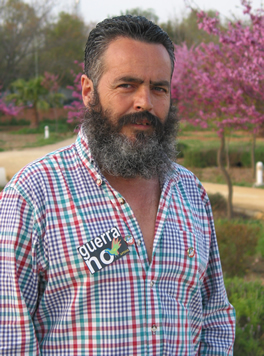
At a time when about one in three Spaniards can find no employment, there is no unemployment in Marinaleda. There is also no hunger, no homelessness, and no police force.

The story of Marinaleda has been told many times over the past thirty years; the most recent account of town's social democratic cooperative governance is related in an article by Sophie McAdam at Salon.com.
Marinaleda has its own web site.
The Spanish Wikipedia page provides a good over-view of the town's characteristics, organization and history.
A story from the NY Times in 2009 looked at Marinaleda as the country was plunging into the depths of the on-going economic collapse.
Subscribe to:
Posts (Atom)